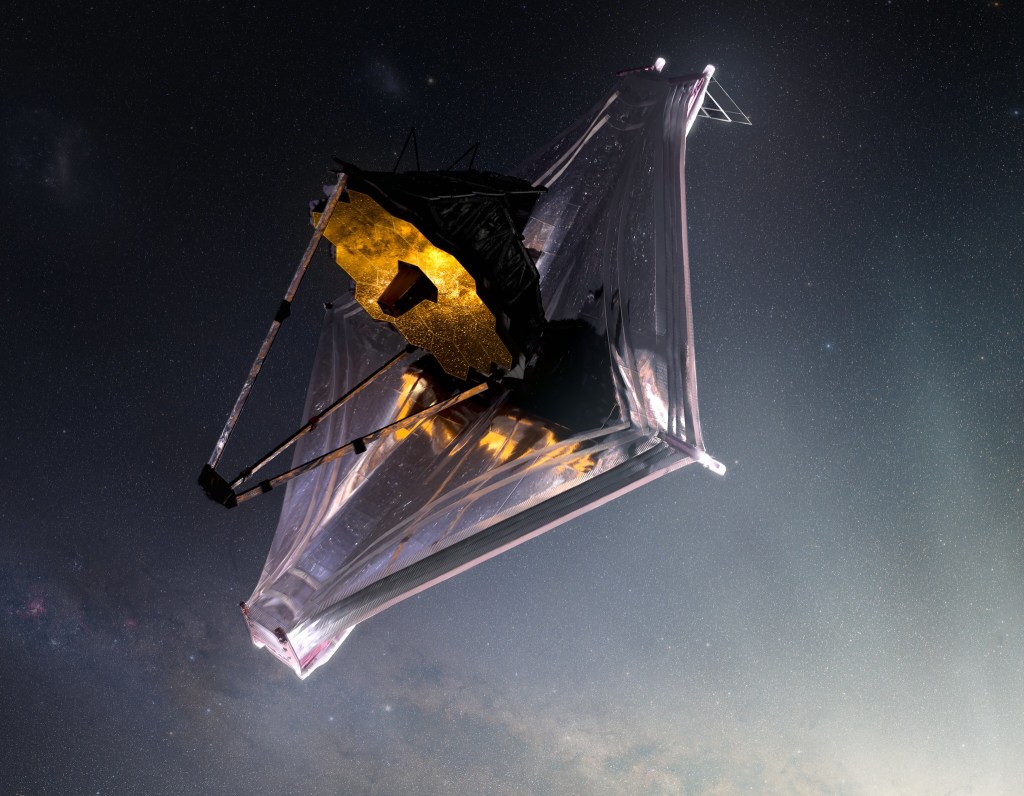
NASA In 2022, NASA will publish the first full-color images and spectroscopic data from the James Webb Space Telescope through a partnership with the European Space Agency and the Canadian Space Agency on July 12th , 2022. In preparation for science, Webb undergoes a six-month period of calibration to its space environment, aligning its mirrors, and aligning its instruments to the environment in space. After months of development and planning, Webb’s first images and data show its full capability: Webb at its best, ready to start its science mission and explore the infrared universe.
Webb’s science and mission operations are handled by the Space Telescope Science Institute (STScI) in Baltimore, which oversees science and mission operations for the space telescope. Choosing what Webb will look at first has taken an international team five years to decide.
In addition to calibration, testing, and green lighting of each of Webb’s instruments, scientists and engineers will be making their first images and spectroscopic observations. A committee of international experts has pre-selected and prioritized a list of targets that Webb will be used to exercise his powerful capabilities through. Webb’s instrument scientists will provide the data, and the production team will process it into public images.
Even though Webb’s first full-color images have been carefully planned for months, it is impossible to predict exactly what they will look like with such a powerful telescope.
Infrared images captured during Webb’s initial alignment show this view to be incredibly sharp. This is the first time Webb is showcasing its full scientific capabilities in full color. Aside from imaging and spectroscopic data, Webb will also capture spectroscopic data. Spectroscopy can provide specific details about light too astronomers. Several science themes will be highlighted in the first images package of the mission: the origin of the universe, galaxy evolution over time, star lifecycles, and other worlds. A public archive will also be maintained for the commissioning data – the data gathered during the alignment and preparation of Webb’s telescope.
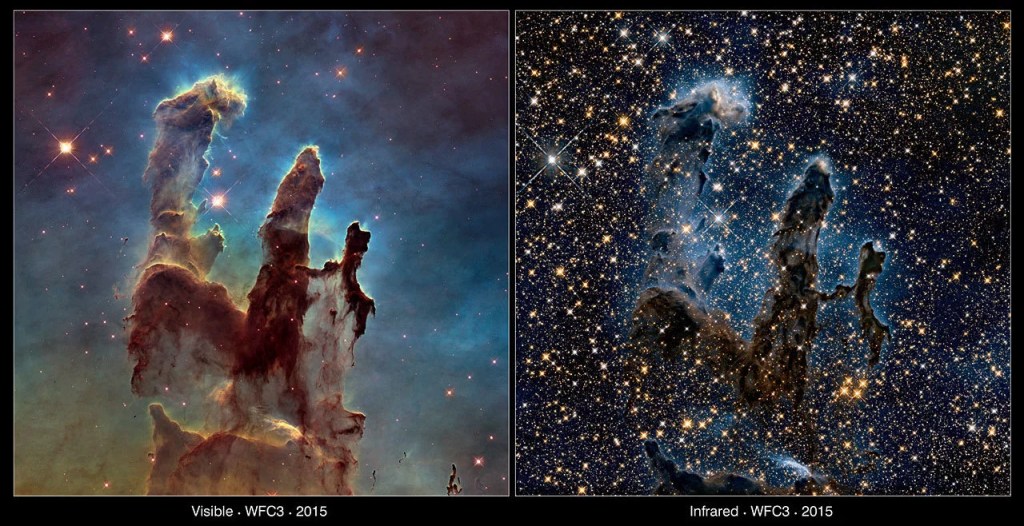
NASA, ESA/Hubble and the Hubble Heritage Team
Webb will begin its scientific observations after its first images are captured, exploring the mission’s key themes. A competitive process has already been established to allocate telescope time to teams during its first year of observations, which astronomers call its first “cycle.” Research activities are carefully planned to maximize telescope utilization.
Observations like these signify the start of the mission’s general science operation, which is what Webb was designed to do. In addition to observing the infrared universe, Webb will be used by astronomers to analyze the data collected and publish their research in scientific journals.
Astronomers cannot predict all the surprises that will be made with Webb. Dark energy, for example, was completely unknown in 1990, when the Hubble Space Telescope was launched. Nowadays, it occupies one of the most intriguing places in astronomy. Who knows what Webb might find?
It is the world’s premier observatory for space science. The mission will explore our solar system, worlds around other stars, and the mysterious origins and structures of the universe in which we live. NASA leads the global Webb mission together with partners ESA (European Space Agency) and CSIA (Canadian Space Agency).
Reported Friday by NASA Webb sustained damage from a rouge space particle. The damage was to a lower quadrant. NASA scientists say this will not affect the images that are returned. The telescope was designed to be compartmentalized where sections could be damaged relatively minutely, and the telescope would still work. This seems like it very well could be foreknowledge about what happened with the first go around with Hubble- A miscalibration and the entire first images were blurry images.
On a sidenote, NASA has another program that will make the presence of human bodies a permanent concept for the Moon. That’s right a colony on the moon. When asked why this one done it was stated that the test performed on the Moon will ultimately get us to Mars.
It sure is exciting to anticipate the images we will get to see in the coming months and what we as humans can accomplish!
Citations.
NASA. (n.d.). NASA. Retrieved June 19, 2022, from https://www.nasa.gov/
Wikimedia Foundation. (2022, June 17). James Webb space telescope. Wikipedia. Retrieved June 19, 2022, from https://en.wikipedia.org/wiki/James_Webb_Space_Telescope
NASAtelevision. (2022, January 8). James Webb Space Telescope: Primary mirror deployment – mission control live. YouTube. Retrieved June 19, 2022, from https://www.youtube.com/watch?v=tlGTem8vkB0
YouTube. (2022, April 16). James Webb Telescope all new discovery shocks the entire space industry!/. YouTube. Retrieved June 19, 2022, from https://www.youtube.com/watch?v=OOZeI-_1t4o
Staff, S. (2022, June 8). NASA’s James Webb Space Telescope mission: Live updates. Space.com. Retrieved June 19, 2022, from https://www.space.com/news/live/james-webb-space-telescope-updates

